AI Anime Generator: A Guide for Independent Creators and Visual Storytellers

Charlotte Bennett
Apr 12, 2026 · 9 min read
Anime has always been a storytelling format I've been drawn to — the expressive character designs, the hyperspecific visual language, the way it handles emotion through graphic rather than photorealistic means. When AI tools started producing convincing anime-aesthetic animation, I spent months exploring what they could actually do for independent visual storytellers. Here's what I've learned.
The AI anime aesthetic: what it does well and where it defaults
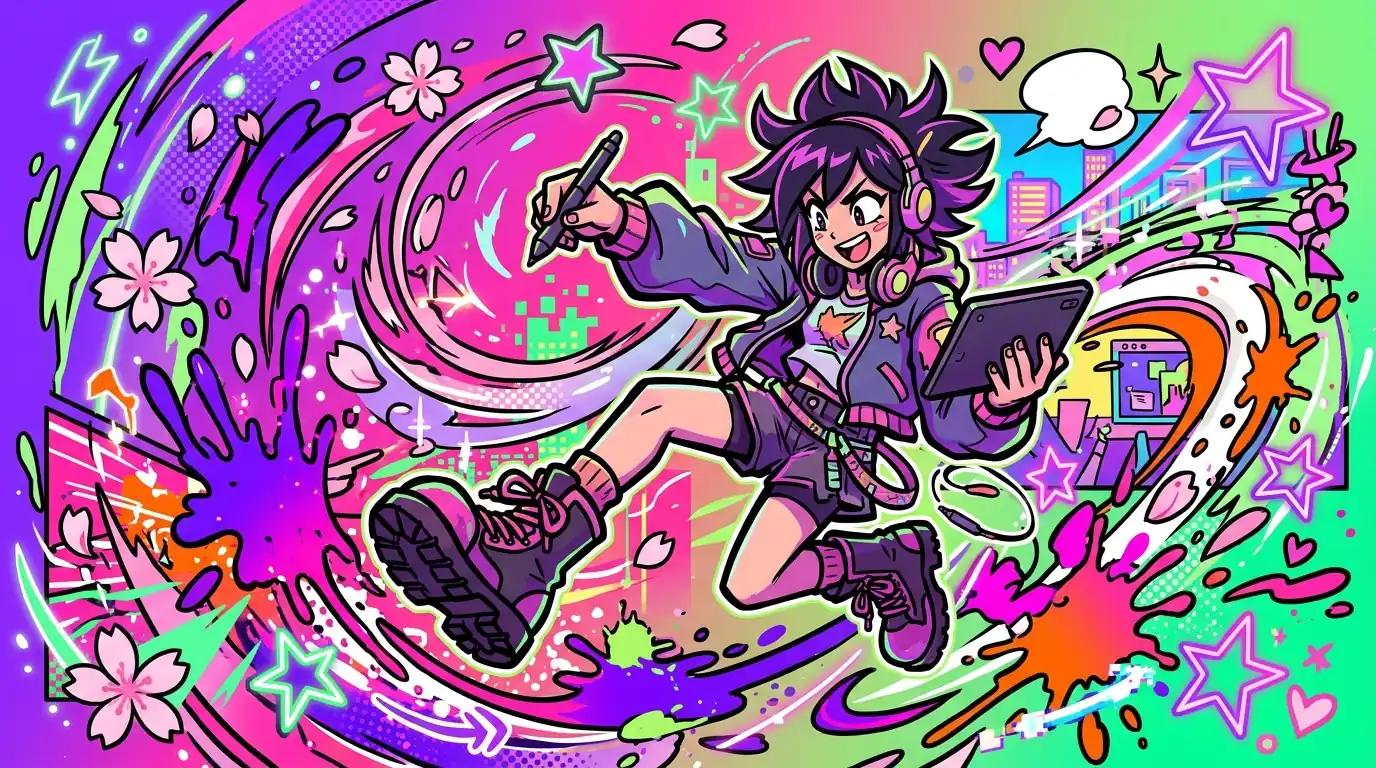
AI anime generators trained on large datasets of Japanese animation have a strong aesthetic default: big eyes, soft lighting, detailed backgrounds, pastel palettes with occasional neon accents, and a general visual vocabulary that reads as 'anime' but in a somewhat averaged way. It's the median anime aesthetic, which is beautiful, but it can be hard to differentiate from.
Getting work that feels distinctive within the AI anime space requires actively pushing against those defaults. Prompting for specific sub-genres — mecha, shōnen battle aesthetic, slice-of-life illustration, horror manga style — gets you further away from the generic than prompting for 'anime style.' Referencing specific animators or studios by descriptive style (not by name, for copyright reasons) also produces more differentiated results.
The area where AI anime generation genuinely excels is background illustration. Lush, detailed anime backgrounds — the kind that take professional background artists days to paint — can be generated in seconds. For independent animators, this is the most significant capability in the toolkit.
Best AI tools for anime-aesthetic content
- NovelAI: The most widely used anime-specialized generation tool. Strong aesthetic fidelity to classic anime styles. Character consistency within a session is better than general-purpose tools.
- Stable Diffusion (anime-fine-tuned models): Extremely flexible when you learn the right models. AnythingV5, CounterfeitV3, and Waifu Diffusion all produce strong results. Requires more technical knowledge but maximum creative control.
- Midjourney: Not anime-specialized but produces strong results with explicit anime style prompting. The V6 model handles complex anime scene composition better than earlier versions.
- Runway (for animation): Best tool for converting anime-style still images into animated scenes. The motion quality on illustrated and drawn-style inputs is better than on photorealistic inputs.
- Kling AI: Strong on animated character motion in stylized aesthetics. The cel-shading aesthetic prompts produce consistent and usable results.
Building a visual narrative with AI anime tools
One of the challenges in using AI tools for narrative visual storytelling is character consistency across scenes. This is AI generation's most persistent weakness for sequential storytelling — the same character described identically will look slightly different in every generation.
The workaround I use: generate a definitive character reference image, save it, and use it as an image conditioning input for every subsequent scene featuring that character. Most AI tools support this pattern. Image-conditioned generation is dramatically more consistent than text-only prompting for character continuity.
The other narrative challenge is pacing. AI animation has no sense of dramatic timing. The motion it generates is procedurally derived from the image content, not from story logic. Building narrative pacing requires editing: cutting clips short, pairing AI visuals with deliberate silence, and using title cards and text as breathing points. The AI generates the images; you create the story from them.
Copyright and originality questions worth thinking about
Independent creators working in AI anime aesthetics should be aware that this is an area where copyright questions are still actively evolving. Using AI tools to produce work in the general style of anime as a visual language is different from generating work that closely replicates specific copyrighted characters or very distinctive studio styles.
My approach: use AI tools to explore and develop original visual ideas, not to reproduce existing characters or specific known works. The aesthetic vocabulary of anime is broad enough that original creative expression within it is entirely possible without getting close to existing IP. The creative work is finding your own visual voice within that vocabulary.