Motion Graphics vs Animation: What Actually Changes in Production

Charlotte Bennett
Apr 6, 2026 · 10 min read
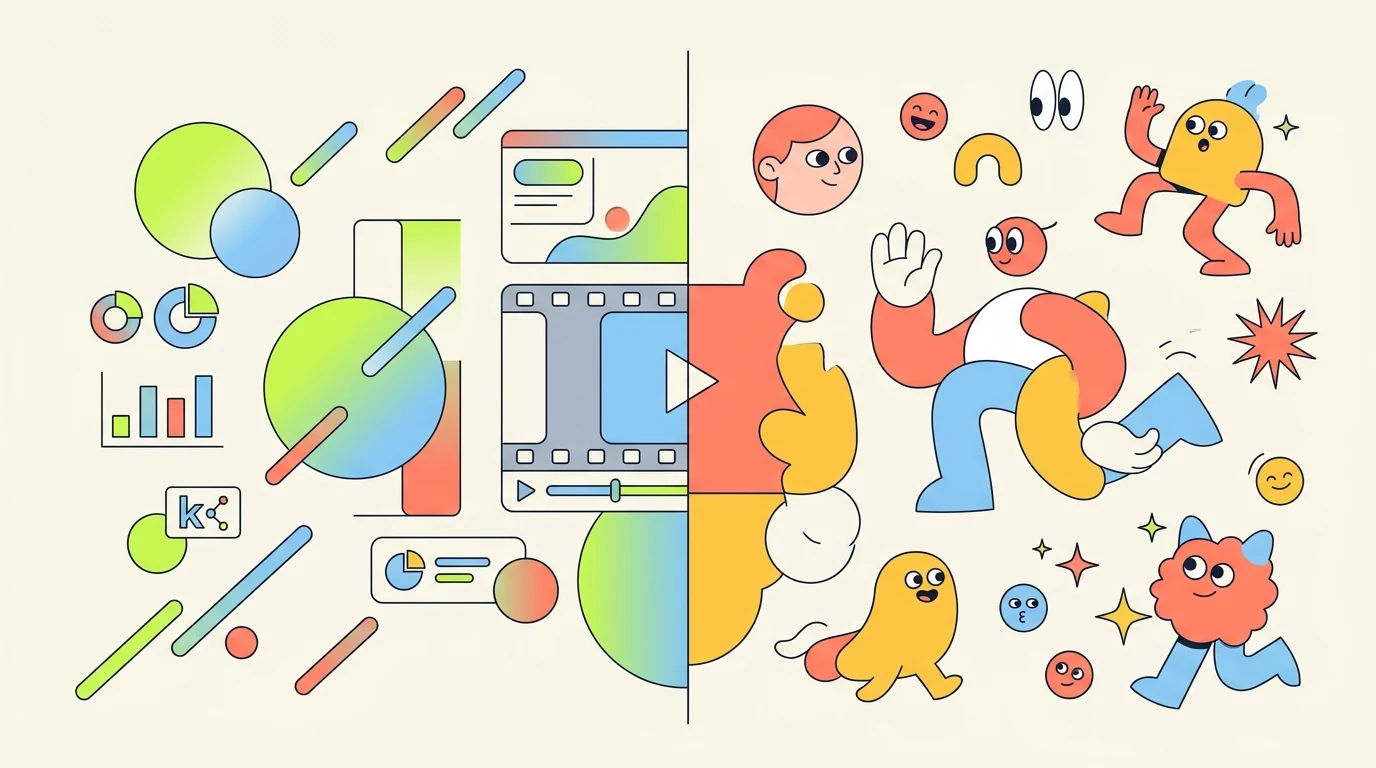
The phrase "motion graphics vs animation" sounds like a tidy comparison, but in practice the boundary is blurry because motion graphics is one type of animation. The distinction still matters because teams budget, storyboard, and review these projects differently. If you understand where the difference shows up in production, you make better creative decisions much earlier.
The simplest distinction
Animation is the broad category. Motion graphics is a specific branch of animation focused on designed visual elements rather than character performance or cinematic storytelling.
That means the comparison is not really category versus category. It is more like asking when a communication problem should be solved with graphic systems and when it should be solved with broader animation techniques.
How the production mindset changes
Motion graphics projects usually begin with message hierarchy, type, and composition. Animation projects built around characters or scenes begin with performance, environment, and continuity. The tools may overlap, but the thinking is different.
If your main problem is "how do we show this clearly?" motion graphics is often the better starting point. If your main problem is "how do we make this world or character feel believable?" you are further into animation territory.
What changes in the review process
- Motion graphics reviews focus on clarity, pacing, typography, and visual hierarchy.
- Broader animation reviews focus more on acting, continuity, physics, and scene performance.
- Motion graphics tolerates abstraction well; character animation usually does not.
- Brand teams often approve motion graphics more quickly because the evaluation criteria are tighter.
Where AI is strongest in each category
AI performs better in motion graphics than in character-heavy animation because motion graphics relies more on structure and less on identity consistency. Text, diagrams, and conceptual visuals are easier for current systems to handle than faces, limbs, and emotional continuity.
That is why tools like TapVid are particularly useful for explainers, educational modules, and product communication. The output does not need a cast of consistent characters to be effective.
Choose based on the job, not the label
Teams get stuck when they treat style labels like status signals. The better question is always functional: what does the viewer need to understand or feel by the end?
If the answer is primarily informational, motion graphics usually wins. If the answer depends on character, world-building, or dramatic continuity, broader animation is the better fit.