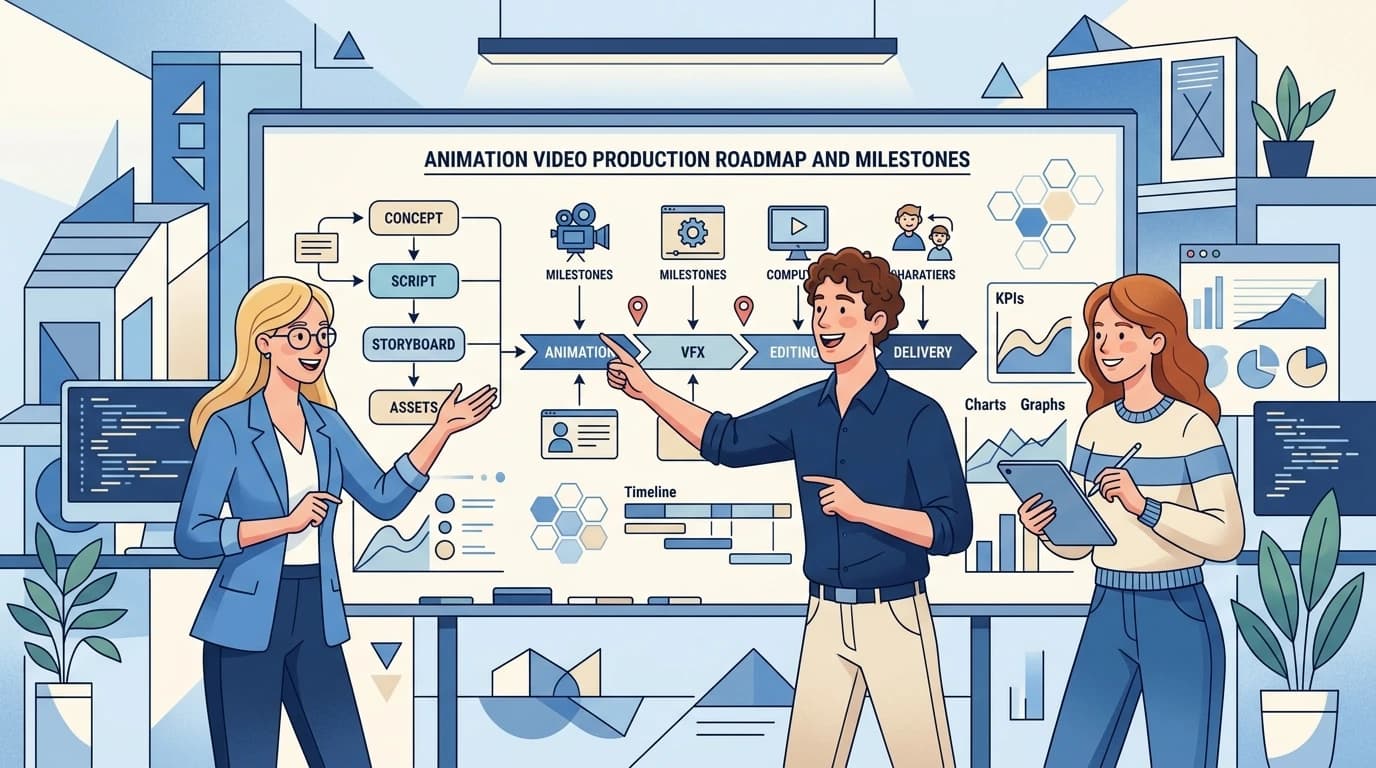
Video Animation Pipeline: How to Balance Speed, Clarity, and Conversion

Min-woo Kim
Apr 16, 2026 · 11 min read
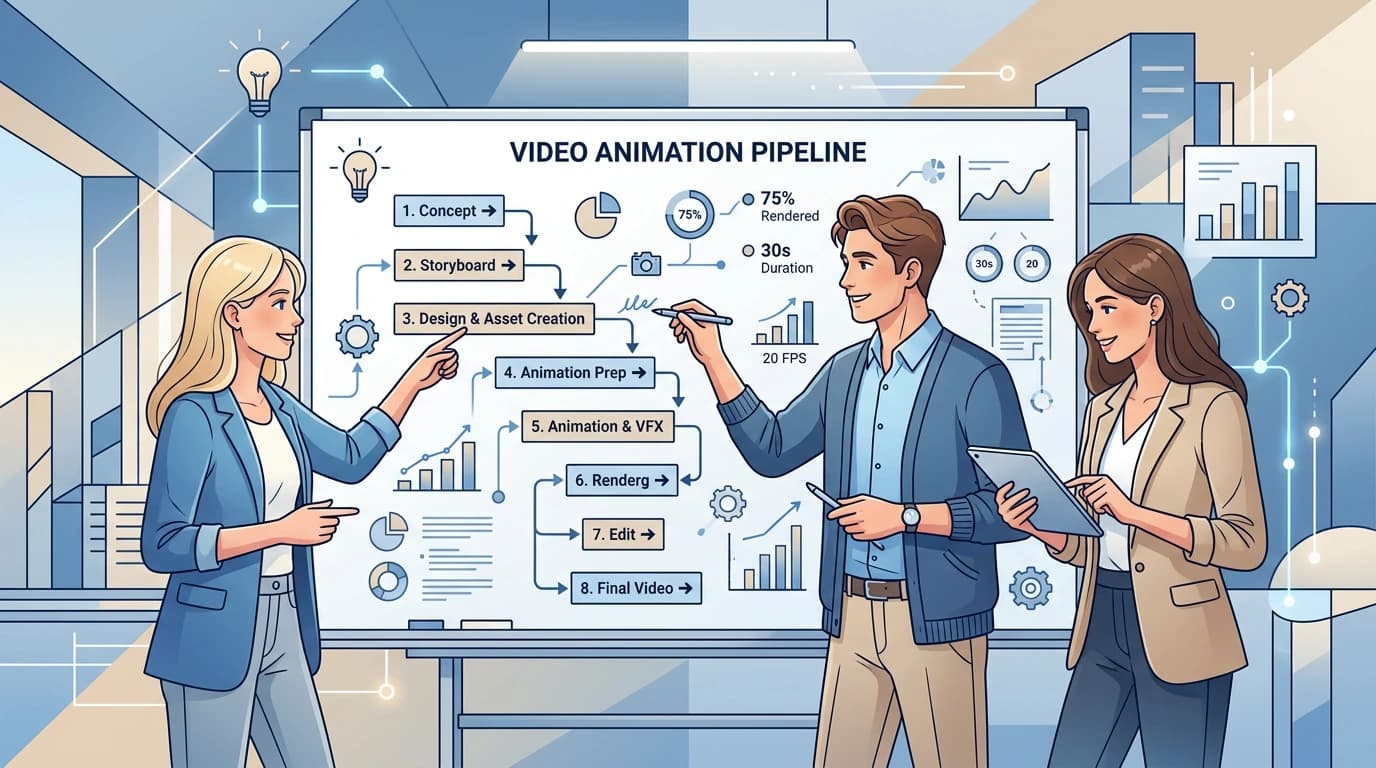
Teams searching "video animation" usually need one thing: a workflow that can scale. Random tool switching and unstructured feedback are the two biggest blockers. This tutorial shows how to design a pipeline that protects both speed and quality.
Why most video animation pipelines break
Pipeline failures are usually operational, not creative. Teams skip intent alignment, then overcompensate with visual complexity. The result is slower production and weaker conversion.
A stable pipeline starts with one source of truth for narrative structure and one shared review standard across roles.
A production model that scales
Build your process around modular scenes: hook, context, mechanism, proof, CTA. This model works across product education, marketing, and internal enablement.
Use TapVid for first-draft assembly and iterative scene replacement, keeping approved assets locked while improving weak sections.
- Create a reusable shot list for each content category.
- Define timing ranges per scene type to keep pacing consistent.
- Run review checkpoints at script stage and rough-cut stage.
- Archive post-launch performance by scene pattern.
How to measure pipeline health
Track cycle time from brief to publish, revision rounds per asset, and post-launch retention. Together, these metrics reveal whether your process is both efficient and effective.
When metrics drop, fix structure before style. Most performance issues come from unclear narrative progression, not insufficient visual polish.
Feature path for growth-oriented teams
For conversion-focused pages, use https://tapvid.ai/feature/interactive-video to add guided interactions that hold viewer attention longer.
If your core use case is competitive positioning, pair your workflow with https://tapvid.ai/feature/competitive-comparison-video to make differences clear and actionable.
FAQ
What is the ideal production cadence? Weekly cycles work best for most content teams because feedback and performance data stay fresh.
How do you reduce revision rounds? Approve structure first, then style, then motion polish.
Can one pipeline serve multiple channels? Yes, if your base narrative is modular and channel adaptations happen at the final stage.